
Custom Silicone Coffee Cup Lid | Belgian 2022 Project

|
Product |
Silicone Coffee Cup Lid (with Drinking Spout & External Thread) |
|---|---|
|
Order Quantity |
Initial Order: 35,000 pcs |
|
Material |
Food-Grade Liquid Silicone (LSR) |
|
Key Specs |
Hardness: Shore A45 Temperature Resistance: -40°C to 220°C |
|
Certification |
FDA, LFGB, RoHS, BPA-Free |
|
Lead Time |
DFM Evaluation: 24 hrs |
Project details
A Belgian coffee equipment brand planned to develop an environmentally friendly, portable coffee cup lid. The client’s existing design had two problems: it leaked easily when filled with hot water, and the drinking spout and other structural parts were prone to cracking after repeated use.

Z.S.R’s engineering team submitted a DFM report, optimizing the product’s sealing, thread engagement, and drinking spout fatigue performance. This was achieved through a pressure relief structure, a gradient sealing lip, rounded threads, and a reinforced drinking spout structure, improving the lid’s sealing stability and smoothness of engagement.
Based on the DFM results, the project moved into mold making and sample production, followed by quality verification of the first batch before mass production.
Delivery data
Engineering DFM Assessment
Micro-Pressure Relief Grooves and Sealing Lips

Z.S.R added three micro-pressure relief grooves, each 0.2 mm deep and 1.2 mm wide, symmetrically placed at the sealing lip ring. The sealing lip of the cup lid adopts a gradient wall thickness design, thickening to 1.3 mm at the root and thinning to 0.5 mm at the tip.
When hot water is poured into the cup, the sealed space generates positive pressure from the heat. A fully sealed lip cannot release this pressure, and the accumulated pressure can push up the lid, causing liquid leakage. The gradually changing lip wall thickness, combined with micro-pressure relief grooves, releases excess pressure when the internal pressure is too high, improving the lid’s sealing strength.
Optimized External Thread Structure
The original design had abrupt changes in thread root wall thickness and a small tooth tip radius, leading to assembly instability. To improve this, the wall thickness in the threaded area was uniformly adjusted to 1.4 mm, the thread profile adopted a 0.4 mm radius transition, the tooth height was slightly adjusted, and an introductory chamfer was added to the thread starting section.
Abrupt changes in thread wall thickness and sharp-angled teeth cause inconsistent force during tightening, resulting in a poor user experience and leakage due to uneven force on the sealing lip. The uniform wall thickness at the thread root, combined with rounded corners and chamfered edges, makes rotation smoother, ensures consistent compression of the sealing lip, and improves the cup’s sealing stability.
Optimized Drinking Slot Structure
The engineering team changed the drinking slot root from a right angle to a 2.0 mm radius arc transition, reduced the wall thickness from 1.4 mm to 0.8 mm, and added a 0.3 mm reinforcing rib to the outer edge of the drinking slot.
The drinking spout needs to be repeatedly opened and closed. Right-angled corners can cause stress concentration, leading to cracks after long-term use. The smooth transition of the large arc at the spout, along with the gradually changing wall thickness and reinforcing ribs on the outer edge, distributes stress throughout the spout area, improving the bending fatigue life of the drinking spout.
Mold Making, Sample Production & Quality Verification

Mold Processing
Z.S.R Group is equipped with 10 advanced CNC machining centers and 4 EDM machines for liquid silicone cup lid molds. Key areas such as the sealing lip, threads, and drinking spout are mirror-polished, and the parting surface is high-precision ground to strictly control flash.

Silicone Molding
Production is supported by 48 solid molding machines, 12 liquid molding machines, and 13 injection molding silicone machines, enabling the rapid molding of 25,000 silicone coffee cup lids within 20 days. Over 10 printing and spraying production lines also allow for printing logos or patterns on the silicone coffee cup lids.

Secondary Vulcanization
After molding, the silicone coffee cup lids undergo secondary vulcanization at 200°C for 2 hours.
The secondary curing process removes small-molecule volatiles from the silicone, reduces product odor, and ensures the lids meet food contact requirements.
Quality Inspection
|
Test |
Condition |
Acceptance Criteria |
Result |
|---|---|---|---|
|
High-Temperature Sealing / Pressure Relief Test |
95°C hot water, tighten lid and keep static for 30 min |
No liquid leakage; pressure can be released normally |
Pass |
|
Thread Engagement Test |
Repeated tightening & loosening for 5,000 cycles |
Smooth screwing without jamming; stable sealing performance |
Pass |
|
Drinking Spout Bending Fatigue Test |
Repeated opening & closing for 5,000 cycles |
No cracks, no obvious stress whitening |
Pass |
|
Dimensional Inspection |
Vision measuring system checks sealing lip and thread dimensions |
Dimensions controlled within ±0.07 mm tolerance |
Pass |
|
Visual Inspection |
Full inspection of product surface |
No bubbles, sink marks, flash or scratches |
Pass |
|
Food Contact Test |
FDA & LFGB food contact migration test |
Complies with relevant food contact requirements |
Pass |
The production samples passed the specified high-temperature sealing, thread engagement, drinking spout fatigue, dimensional, visual, and food contact inspections. In particular, smooth screwing without jamming was maintained after 5,000 tightening cycles.
Related Product


Customer reviews & feedback
“Thank you for contacting me. I am still testing these parts, and so far they seem to be working quite well.” The customer subsequently repurchased 3,000 more cup lids.
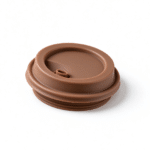
Custom Silicone Coffee Cup Lid
OEM & ODM solutions for brands, retailers, wholesalers, and Ecommerce sellers. Food-grade liquid silicone coffee cup lids with FDA/LFGB/RoHS compliance.
Other Project


For industrial-scale production, ZSR Group also operates a dedicated silicone compression molding service for custom silicone parts.
