
Custom Silicone Coffee Cup | Swiss 2021 Project

|
Product |
Collapsible Food-Grade Silicone Coffee Cup |
|---|---|
|
Order Quantity |
Initial Order: 45,000 pcs |
|
Material |
Food-Grade Liquid Silicone (LSR) |
|
Key Specs |
Hardness: Shore A40 Temperature Resistance: -40°C to 230°C |
|
Certification |
FDA, LFGB, REACH Compliant |
|
Lead Time |
DFM Evaluation: 24 hrs |
Project details
A Swiss brand of portable outdoor tableware planned to launch a foldable coffee cup to replace paper and plastic cups. The client encountered difficulties during the early sample development stage: the folding texture cracked after repeated folding, water easily leaked from the gap between the lid and the body, and the labeling on the cup had poor adhesion.

Z.S.R conducted a Design for Manufacturing (DFM) review for the issues encountered during the initial sample stage, and proposed several improvements: optimizing the folded corrugated structure, adding a sealing lip at the connection between the cup body and the rim, and adding plasma surface treatment. To avoid unexpected shrinkage and deformation, the overall wall thickness of the cup was designed to be uniform.
Based on the DFM results, the project moved into mold making and sample production, followed by quality verification of the first batch before mass production.
Delivery data
Engineering DFM Assessment

Optimized Folded Corrugated Structure
To distribute the stress generated during folding, Z.S.R’s engineering team thickened the radius at the bend root from R0.4 mm to R1.2 mm, and standardized the wall thickness of the corrugated area to 1.5 mm.
The original design had small corrugated corners and inconsistent wall thickness, causing stress to concentrate in localized areas during folding and making the cup prone to cracking after repeated bending. Optimizing the corrugated corners and wall thickness structure disperses the folding stress, improving service life.
Added Sealing Lip
To address the leakage issue observed in samples during high-temperature drinking, engineers abandoned the original sealing design and added a ring-shaped sealing lip to the inside of the lid, a positioning protrusion to the cup rim, and a small venting groove.
Simple radial seals are easily affected by temperature, while independent lip-face seals are unaffected by changes in cup size. Positioning bosses and venting channels further ensure reliable sealing during use.
Plasma Surface Activation Treatment
To enhance the adhesion of the printed logo, Z.S.R performed a plasma surface activation treatment after secondary vulcanization, followed by logo printing using silicone-specific ink. A matte etching treatment was applied to the printed area, and ink baking and curing parameters were strictly controlled.
Liquid silicone is a low surface energy material; using ordinary ink directly results in poor adhesion of the printed pattern. Plasma activation treatment combined with silicone-specific ink and a matte finish on the printed area increases ink adhesion, achieving resistance to washing and friction.
Optimized Wall Thickness and Gate Position
To address the issue of excessive wall thickness in some areas of the cup bottom, Z.S.R thinned the excessively thick solid cup bottom, transferred the LSR injection point to the cup bottom, and added venting grooves to fill the dead corners at the end of the corrugations.
Excessive local wall thickness can easily lead to shrinkage and depressions. Adjusting the position of the gate and venting channels reduces defects such as weld lines and trapped air, improving product yield.
Mold Making, Sample Production & Quality Verification

Mold Processing
Z.S.R Group is equipped with 10 advanced CNC machining centers and 4 EDM machines for liquid silicone cup mold making. Mirror polishing ensures a smooth, burr-free finished surface.

Silicone Molding
Production is supported by 48 solid molding machines, 12 liquid molding machines, and 13 injection molding machines using food-grade liquid silicone injection molding technology, enabling the rapid molding of 30,000 silicone coffee cups within 20 days. Over 10 printing and spraying production lines also allow for printing logos or patterns on the silicone coffee cups.

Secondary Vulcanization
After molding, the silicone coffee cups undergo secondary vulcanization at 200°C for 2 hours.
The secondary curing process removes small-molecule volatiles from the silicone, ensuring food contact safety.
Quality Inspection
|
Test |
Condition |
Acceptance Criteria |
Result |
|---|---|---|---|
|
Fold Endurance Test |
Repeated folding of cup body for 5,000 cycles |
No cracks, no significant stress whitening |
Pass |
|
High-Temperature Sealing Test |
80°C hot water, inverted and left to stand for 4 hours |
No noticeable leakage |
Pass |
|
Silk Screen Print Abrasion Test |
500 reciprocating wipes with alcohol |
No logo peeling, no noticeable blurring |
Pass |
|
Drop Test |
Drop from 1.2 m height on all six faces |
No product damage, no water leakage |
Pass |
|
Food Contact Test |
Laboratory chemical migration testing |
Meets project-specific FDA and LFGB requirements |
Pass |
|
Hazardous Substance Test |
REACH SVHC testing |
Meets REACH SVHC limit requirements |
Pass |
The production samples passed the specified fold endurance, high-temperature sealing, print abrasion, drop, food contact, and hazardous substance inspections. In particular, no cracks or stress whitening was observed after 5,000 folding cycles.
Related Silicone Bowl Product




Customer reviews & feedback
“The coffee cups have been successfully delivered to our office, and we are very satisfied with the quality of the finished product. The sample effect is excellent, fully demonstrating the application prospects of this technology. We are very honored to cooperate with you and your company. Thank you very much!”
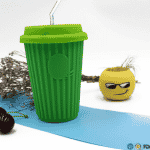

Custom Silicone Coffee Cup
OEM & ODM solutions for brands, retailers, wholesalers, and Ecommerce sellers. Food-grade collapsible silicone coffee cups with FDA/LFGB/REACH compliance.
Other Project


For industrial-scale production, ZSR Group also operates a dedicated silicone compression molding service for custom silicone parts.
