
Custom Silicone Heat-Resistant Mat | German 2023 Project

|
Product |
Rectangular Ribbed Silicone Heat-Resistant Mat |
|---|---|
|
Order Quantity |
Initial Order: 12,000 pcs |
|
Material |
Food-Grade Solid Silicone |
|
Key Specs |
Hardness: Shore A45 Temperature Resistance: -40°C to 230°C |
|
Certification |
GB 4806.11, FDA, LFGB |
|
Lead Time |
DFM Evaluation: 24 hrs |
Project details
A German kitchenware brand wanted to develop a flat silicone heat-insulating mat suitable for family dining tables, kitchen baking, and everyday heat insulation. However, the client’s original design sample had three main problems: warped edges, insufficient anti-slip properties, and easy tearing upon demolding.

Z.S.R’s engineering team conducted a DFM (Design for Manufacturing) evaluation of the customer-supplied samples within 24 hours, proposing optimization solutions for the mat surface, edge structure, and venting system.
Based on the DFM results, the project moved into mold making and sample production, followed by quality verification of the first batch before mass production.
Delivery data
Engineering DFM Assessment
Thickened Rounded Edges + Stress Relief Grooves

Z.S.R adopts a multi-cavity mold with symmetrical runners, and the injection points are evenly distributed along the cavity edges. The right angles around the mat are changed to R3.0 mm rounded corners, the edges are thickened to 2.8 mm, and the corners use R3.5 mm rounded transitions to form a one-piece thickened edge. A 0.3 mm deep stress relief groove is added to the inner side of the thickened edge.
Multi-cavity balanced injection ensures uniform pressure distribution within the mold cavity, reducing stress imbalance caused by post-molding variations. The stress relief grooves on the back provide directional channels for releasing shrinkage stress without affecting the finished product’s appearance and feel. During the cooling process of a flat, thin mat, the shrinkage rate between the center and edges is inconsistent, and the released residual stress can easily cause the mat’s edges to warp. The 3.0 mm rounded corners combined with thickened edges form a frame that improves the mat’s resistance to deformation.
Anti-slip Stripes on the Plane
To improve the mat’s anti-slip properties, engineers added parallel stripes 0.8 mm high and 3 mm spaced along the short side of the mat, with semi-circular transitions in the stripe cross-sections.
Smooth silicone mats have a low coefficient of friction when in contact with objects, making them prone to sliding. Parallel stripes increase contact resistance, while the semi-circular stripe cross-section avoids stress concentration at the roots of right-angle stripes, improving the mat’s anti-slip and durability.
Optimized Mold Venting and Demolding Structure
Engineers added 0.02 mm micro-venting grooves in the dead corners of the planar cavity to expel trapped air. To prevent the material from tearing due to excessive contact with the sharp corners of the mold cavity during mold opening, the right-angled edges of the mat were eliminated.
The venting grooves within the cavity help expel trapped air, preventing air bubbles and material shortages during demolding. Right-angled edges of the rubber material tend to adhere too tightly to the sharp corners of the mold cavity during demolding, easily tearing under strong pulling. The 3.0 mm rounded corners eliminate stress concentration, effectively reducing the demolding defect rate.
Mold Making, Sample Production & Quality Verification

Mold Processing
Z.S.R Group is equipped with 10 advanced CNC machining centers and 4 EDM machines, capable of creating molds for solid silicone mats.

Silicone Molding
Production is supported by 48 solid molding machines, 12 liquid molding machines, and 13 injection molding machines utilizing a one-piece solid silicone molding method to produce silicone heat-resistant mats. Over 10 printing and spraying production lines also allow for printing logos or patterns on the silicone mats.

Secondary Vulcanization
After molding, the silicone heat-resistant mats undergo secondary vulcanization at 200°C for 2 hours.
The secondary curing process removes small volatile molecules from the silicone, reduces product odor, and ensures the mats meet food contact standards.
Quality Inspection
|
Test |
Condition |
Acceptance Criteria |
Result |
|---|---|---|---|
|
Folding Fatigue Test |
Repeatedly fold the mat 5,000 times |
No cracks or visible stress whitening |
Pass |
|
Hardness Test |
Measured at room temperature using a Shore A durometer |
45 Shore A |
Pass |
|
Dimensional Inspection |
Full dimensional measurement using digital calipers |
Overall dimensional tolerance: ±0.3 mm |
Pass |
|
Thermal Cycling Test |
50 heating and cooling cycles between -40°C and 230°C |
No deformation, cracking, or delamination |
Pass |
|
Food Contact Migration Test |
Tested in accordance with applicable GB 4806.11, FDA, and LFGB requirements |
Heavy metal and volatile substance migration levels within applicable limits; no unacceptable migration |
Pass |
|
Tensile Strength Test |
Tested using a universal testing machine |
Tensile strength ≥ 8 MPa; no rupture |
Pass |
|
Anti-Slip Friction Test |
Friction coefficient tested on a dry tabletop |
Coefficient of friction ≥ 0.45; no sliding under heavy loads |
Pass |
|
Visual Inspection |
Visual and tactile inspection |
No bubbles, incomplete filling, obvious flash, or black spots |
Pass |
The production samples passed the specified folding fatigue, hardness, dimensional, thermal cycling, food contact, tensile strength, anti-slip friction, and visual inspections. In particular, no cracks or stress whitening was observed after 5,000 folding cycles.
Related Product


Customer reviews & feedback
After receiving 12,000 mats, the customer provided positive feedback: “Hello! Yes, I received the mats, they look fantastic, we love them, and I can’t wait to show them to my customers.” Following this, the customer achieved good sales results and placed a repurchase order for 30,000 more.
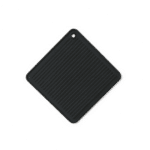

Custom Silicone Heat-Resistant Mat
OEM & ODM solutions for brands, retailers, wholesalers, and Ecommerce sellers. Food-grade silicone heat-resistant mats with FDA/LFGB compliance.
Other Project


For industrial-scale production, ZSR Group also operates a dedicated silicone compression molding service for custom silicone parts.
