
Custom Foldable Silicone Bowl | German 2022 Project

|
Product |
Foldable Silicone Bowl with Carabiner Clip |
|---|---|
|
Order Quantity |
Initial Order: 12,000 pcs |
|
Material |
Food-Grade Solid Silicone + Metal Carabiner Clip |
|
Key Specs |
Hardness: Shore A40-45 Temperature Resistance: -40°C to 230°C |
|
Certification |
FDA, LFGB |
|
Lead Time |
DFM Evaluation: 24 hrs |
Project details
A German outdoor gear brand wanted to develop a portable silicone bowl suitable for travel or camping. They found that some silicone bowls on the market had issues such as poor design, easy whitening and cracking at folds and creases, unpleasant odors, or deformation when exposed to hot water.

Based on 19 years of custom silicone product experience, Z.S.R Group developed the product around these failure points. The proposed solution used platinum-cured food-contact-grade silicone, followed by secondary vulcanization.
The bowl rim was locally thickened to improve structural support, while the folding section used different wall thicknesses at the corrugated base and sidewalls. A mounting feature was also incorporated into the side of the bowl for the metal hook attachment.
Delivery data
Engineering DFM Assessment
Material Selection and Odor Control

Residual odor was identified as one of the main quality concerns. A pungent odor in a finished silicone product can indicate residual low-molecular-weight compounds from the curing process or contaminants adsorbed during subsequent handling and storage.
Z.S.R Group specified platinum-cured food-contact-grade silicone, with all raw materials required to meet the applicable food-contact material requirements. Vulcanization equipment parameters were controlled according to the specified process conditions.
Odor control also extended beyond molding. The client controlled raw-material handling, secondary curing, packaging, and storage conditions throughout production. The client kept packaged silicone products separate from materials or chemicals that could transfer odor through environmental exposure.
Bowl Rim Reinforcement
The client’s original design proposed PP edging around the bowl rim to provide additional support. This approach would have introduced a relatively rigid component into the folding structure and reduced the overall flexibility of the bowl.
Z.S.R Group removed the PP edging from the design and increased support through localized silicone thickness instead. The reinforced rim uses the silicone section itself to provide the required stiffness while retaining the flexibility needed for folding and packing.
Corrugated Folding Structure
The folding section was designed with different wall thicknesses according to the mechanical load on each area. The corrugated base was increased to 2.2 mm, while the sidewalls were reduced to 1.2 mm.
Repeated folding places higher localized stress around the roots of the corrugated structure. The 2.2 mm corrugated base provides additional material in these higher-load regions, while the 1.2 mm sidewalls remain flexible enough to deform during compression.
This thickness distribution reduces excessive folding resistance and limits stress concentration at the crease roots, allowing the bowl to recover its working shape after repeated stretching, folding, and compression.

Metal Hook Attachment
A mounting feature for the metal hook was incorporated into the side of the bowl. The design used mechanically secured hook-and-loop fastening material (Velcro) to support installation and removal of the metal hook.
The attachment method allows the hook assembly to be fitted without making the main silicone bowl structure unnecessarily rigid.

Mold Making, Sample Production & Quality Verification

Mold Processing
Z.S.R Group operates 6 advanced CNC machining centers and 4 EDM machining centers for silicone bowl mold manufacturing. The tooling was produced around the revised rim reinforcement, corrugated folding geometry, 2.2 mm base thickness, 1.2 mm sidewall thickness, and mounting structure for the metal hook.

Silicone Molding
Production is supported by 48 solid-state molding machines, with capacity to mold 12,000 silicone bowls within 15 days. Process control focused on maintaining consistent material distribution across the locally reinforced rim, thin flexible sidewalls, and thicker corrugated base. These areas have different mechanical functions and therefore require consistent molding dimensions to maintain the intended folding and rebound behavior.

Secondary Vulcanization
After molding, the silicone bowls undergo secondary vulcanization at 200°C for 2 hours.
The secondary curing process is used to reduce residual volatile substances in the silicone and minimize residual odor before packaging and storage.
Quality Inspection
|
Test |
Condition |
Acceptance Criteria |
Result |
|---|---|---|---|
|
100% Appearance Inspection |
Inspect the surface for defects, deformation, damage, and burrs |
No defects, deformation, damage, or burrs |
Pass |
|
Folding Durability Test |
Repeatedly fold the bowl for ≥5,000 cycles |
No cracking or deformation |
Pass |
|
High- and Low-Temperature Test |
Alternate between high- and low-temperature environments at -40°C and 230°C |
No damage, aging, or deformation |
Pass |
|
Load-Bearing Suspension Test |
Apply weight to the metal carabiner clip |
No tearing or deformation |
Pass |
The production samples passed the specified appearance, folding durability, temperature resistance, and suspension-load inspections. In particular, no cracking or deformation was observed after ≥5,000 folding cycles, and the samples showed no damage, aging, or deformation under the specified -40°C to 230°C high- and low-temperature test conditions.
Related Silicone Bowl Product


Customer reviews & feedback
“We received the order last week and have checked the products. We are very happy with the final products. We will test them in the market and let you know if we need to place another order soon.”
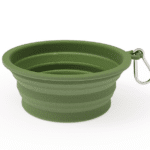

Custom Silicone Bowl
OEM & ODM solutions for brands, retailers, wholesalers, and Ecommerce sellers. Food-grade silicone bowls with FDA/LFGB certification.
Other Project


For industrial-scale production, ZSR Group also operates a dedicated silicone compression molding service for custom silicone parts.
